

Blog
Welding Fume Extraction Hoses

Welding fumes generated during welding, cutting, and other metalworking processes should be effectively removed from the workplace. One of the key components of any extraction system is a properly selected welding fume extraction hose. The hose is responsible for transporting contaminated air from the point of generation to the ventilation system, filter unit, or dust collection equipment.
Depending on the working conditions, different types of hoses are used. Standard ventilation systems may utilize PVC ventilation hoses, while environments where the hose may come into contact with hot sparks require spark-resistant welding hoses. Choosing the right hose affects extraction efficiency, system durability, and workplace safety.
How Do Welding Fume Extraction Hoses Work?
A hose provides the connection between the contaminated air intake point and the remaining components of the extraction system. It can be connected to an extraction arm, hood, or ventilation duct connection.
A typical welding fume extraction system consists of several basic components:
- Fume capture point located directly at the workstation
- Extraction arm or hood
- Flexible hose
- Ventilation ducts
- Fan
- Filter or air purification unit
The flexible hose makes it possible to position the extraction system exactly where fumes are generated. This is particularly important at workstations where the operator frequently changes the position of the tool or workpiece.
A properly selected welding extraction hose should provide adequate airflow while allowing unrestricted movement of the extraction arm.
PVC Ventilation Hoses for Welding Fume Extraction
PVC ventilation hoses are commonly used in various ventilation and extraction systems. Their primary advantages include flexibility, low weight, and ease of installation.
Depending on their construction, they may be used for transporting air, fumes, and other contaminants generated during industrial processes.
Properties of PVC Hoses
Key advantages of flexible PVC hoses include:
- Good flexibility
- Low weight
- Easy installation
- Flame-retardant properties
- Temperature resistance
- Availability in various diameters and lengths
PVC hoses can be a suitable solution in installations where the hose is not directly exposed to hot sparks.
Where Can PVC Hoses Be Used?
Depending on the specifications of a particular model, PVC hoses may be used for:
- Extraction of contaminated air
- Local workstation ventilation
- Fume transport
- Connecting components of ventilation systems
- Extraction systems in industrial facilities
However, it is important to note that not every PVC hose is suitable for use in the immediate vicinity of welding operations. If there is a risk of contact with hot sparks or heated metal particles, a hose with adequate thermal resistance should be used.
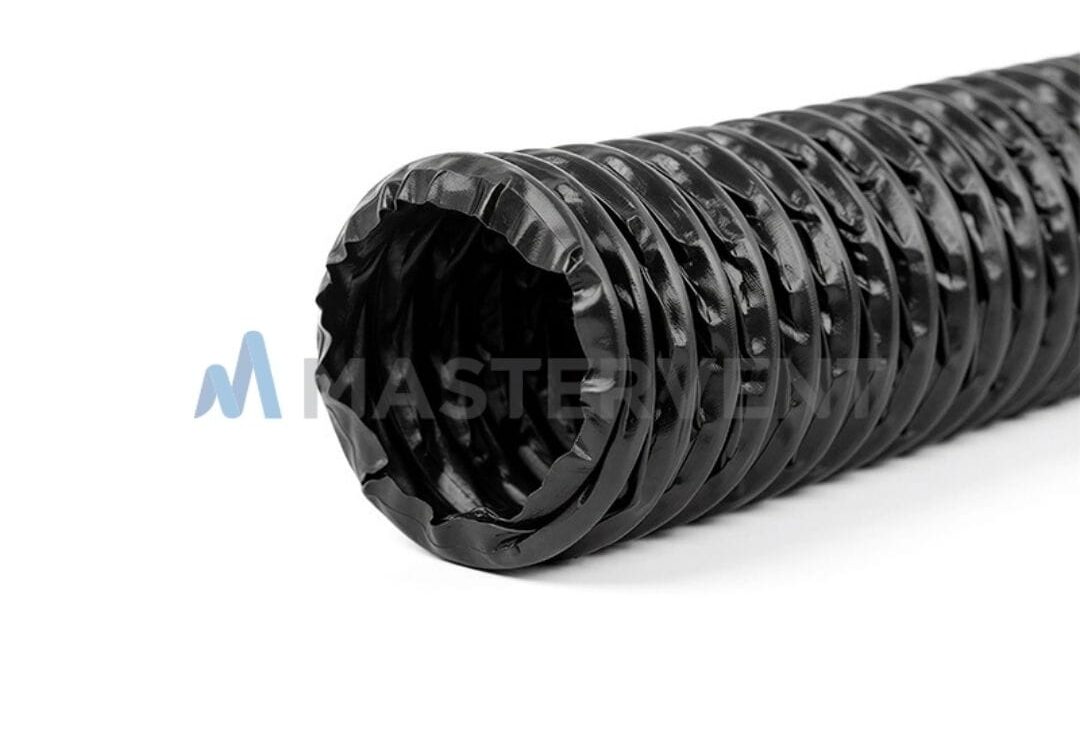
VENT PS
High-quality welding hose made of PVC-coated polyester fabric, designed for the extraction of welding fumes generated during welding, metal cutting, and related processes.
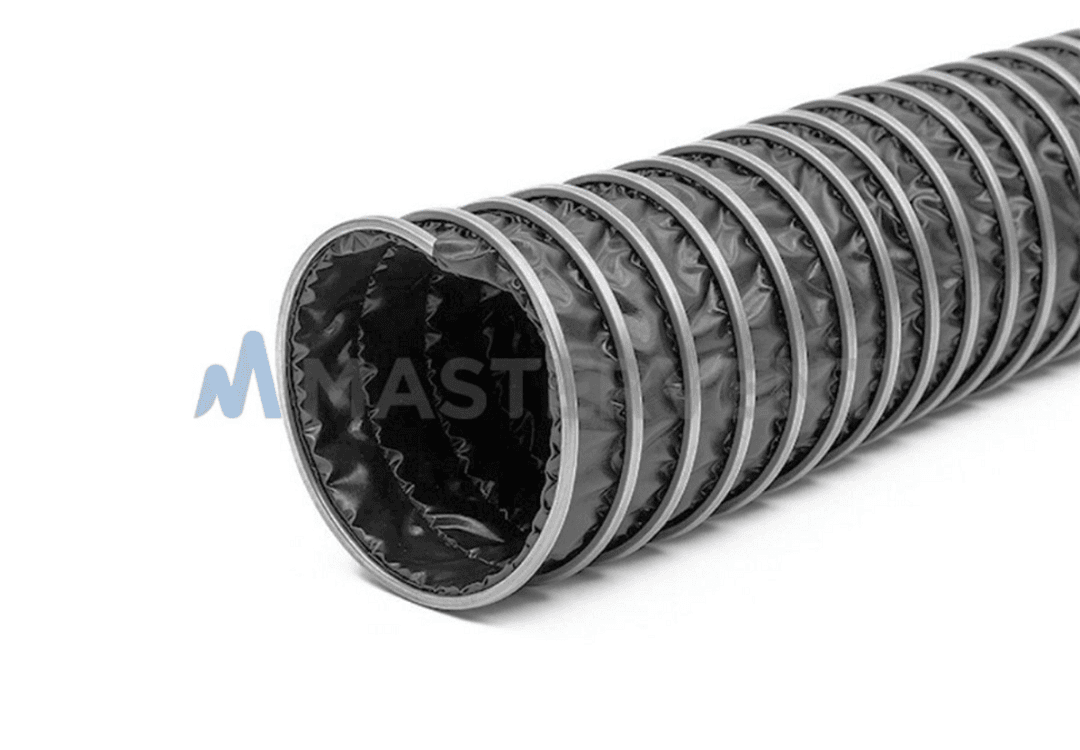
VENT CLIP PS
High-quality ventilation hose made of PVC-coated polyester fabric, designed for air ventilation and the extraction of welding fumes.
Spark-Resistant Welding Hoses
Welding operations generate sparks and hot metal particles that may travel toward the extraction point. If an unsuitable hose is used, these particles can damage the hose wall, causing localized burn-through or shortening its service life.
For this reason, specialized spark-resistant welding hoses are used in applications where the hose may be exposed to sparks.
Their design is intended for more demanding operating conditions than standard ventilation hoses.
Why Are Welding Sparks a Hazard to Hoses?
Sparks generated during welding reach high temperatures and can cause localized damage to hose materials. The risk is particularly high when the hose is positioned close to the source of the fumes.
Long-term exposure to sparks may lead to:
- Burn-through of the hose wall
- Formation of holes
- Loss of airtightness
- Reduced extraction performance
- More frequent hose replacement
Therefore, when selecting a hose, it is important to consider not only the temperature of the transported air but also the potential exposure of the hose surface to hot particles.
Construction of Spark-Resistant Hoses
Hoses designed for use near welding processes may be manufactured from materials with enhanced thermal and mechanical resistance. Depending on the model, specialized fabrics, coatings, and multi-layer constructions are used.
Important characteristics include:
- Resistance to high temperatures
- Resistance to short-term contact with hot particles
- Mechanical durability
- Flexibility
- Properly selected reinforcing spiral
Thanks to these features, a spark-resistant welding hose can be used in more demanding conditions than a standard ventilation hose.
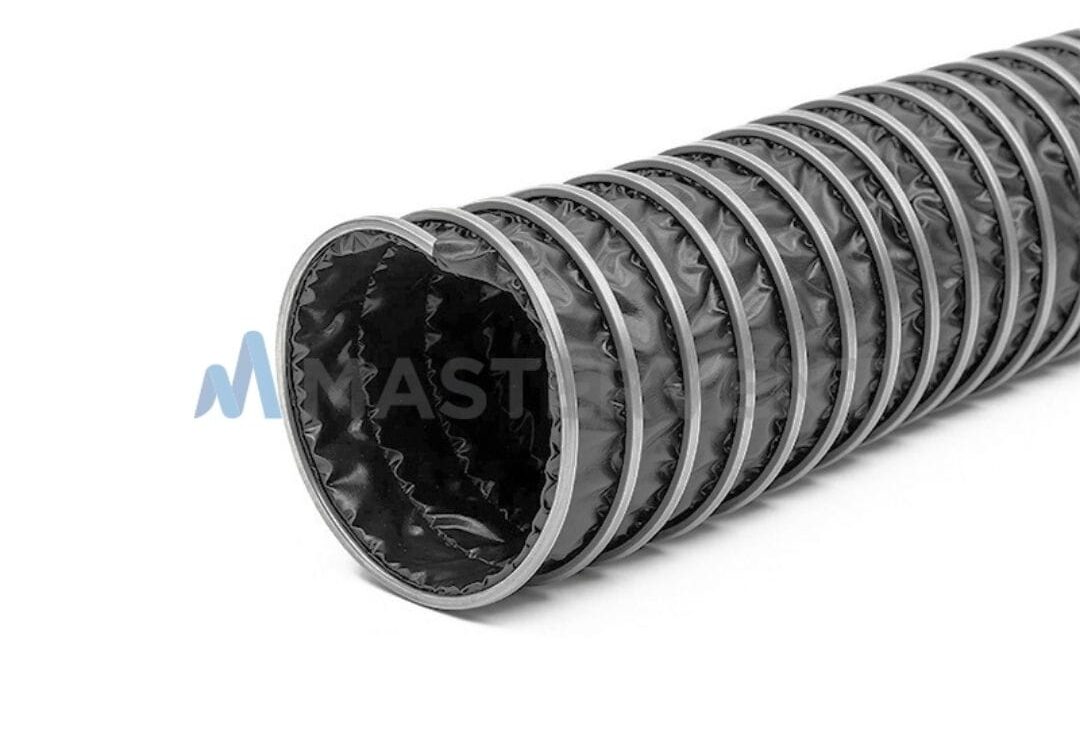
VENT CLIP SPARK
High-quality spark-resistant welding hose made of PVC-coated fiberglass fabric, designed for the extraction of welding fumes generated during welding, metal cutting, and related processes.
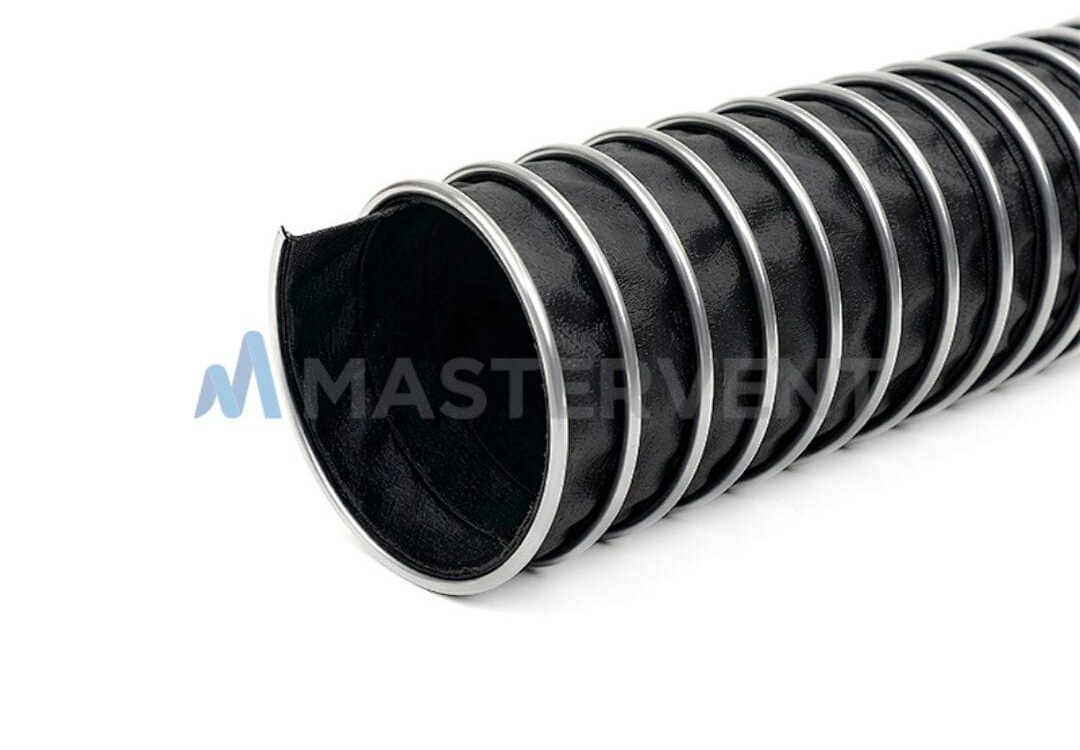
VENT CLIP SPARK XL
High-quality, extremely spark-resistant welding hose made of special heat-resistant fabric, designed for the extraction of welding fumes generated during welding, metal cutting, and related processes.
How to Choose a Welding Fume and Air Extraction Hose
The selection of an appropriate hose should always take into account its intended application and the working conditions at the workstation.
Hose Diameter
The diameter should match the extraction system and fan capacity. A diameter that is too small can increase airflow resistance and reduce extraction efficiency.
Hose Length
The hose should be long enough to allow convenient positioning of the extraction point but should not be excessively oversized. An unnecessarily long hose can increase airflow resistance and make workstation operation more difficult.
Flexibility
For mobile extraction arms, adequate flexibility is essential. The hose should allow free movement of the capture point without excessive bending or kinking.
Temperature Resistance
If the hose operates near a high-temperature source, its maximum operating temperature should be checked. This parameter should be selected according to the actual conditions at the workstation.
Spark Resistance
If the hose may come into contact with welding sparks, a model specifically designed for this type of application should be selected. A standard ventilation hose may not provide sufficient protection.
Common Mistakes When Selecting a Welding Hose
Improper hose selection can reduce the effectiveness of the entire extraction system and accelerate hose wear.
Common mistakes include:
- Using a standard PVC hose in areas exposed to sparks
- Choosing a hose with an insufficient diameter
- Using an excessively long hose
- Ignoring the temperatures present in the work area
- Selecting a hose with inadequate mechanical resistance
- Failing to match the hose to a movable extraction arm
Before purchasing, it is advisable to assess all operating conditions and choose the hose type accordingly.
How to Extend the Service Life of a Welding Extraction Hose
Even a high-quality hose requires proper operation and maintenance. Regular inspections help detect damage early and reduce the risk of system failure.
Best practices include:
- Avoid excessive bending of the hose
- Prevent unnecessary crushing or compression
- Regularly inspect the hose surface
- Check areas most exposed to sparks
- Inspect connections and clamps
- Replace the hose if significant damage or loss of airtightness occurs
Particular attention should be paid to the section of hose located closest to the source of fumes and sparks, as this area is usually subject to the greatest thermal stress.
Summary
Welding fume extraction hoses are an essential component of local exhaust ventilation systems used in manufacturing plants, workshops, and welding facilities. The right hose should be selected not only based on diameter and length but also with consideration of operating temperatures and the risk of exposure to sparks.
PVC ventilation hoses can perform well in standard applications where they are not directly exposed to hot sparks. Spark-resistant welding hoses, on the other hand, are intended for more demanding environments where contact with sparks or hot metal particles is possible.
A properly selected welding extraction hose helps maintain system efficiency, minimize the risk of damage, and ensure long-term, trouble-free operation of the extraction system.


