Cellulose blowing is one of the most popular methods of installing thermal insulation in buildings. This technology enables the fast and uniform filling of cavities in walls, ceilings, and attics with insulating material that offers excellent thermal performance. A key component of the entire process is an efficient pneumatic conveying system, an integral part of which is flexible cellulose blowing hoses.
What Is Cellulose Blowing?
Cellulose blowing is an insulation method that involves the pneumatic transportation of shredded insulating material into properly prepared structural cavities within a building.
This technology is commonly used for:
- Insulating occupied and unoccupied attics
- Insulating timber-frame walls
- Insulating wooden and concrete floors
- Retrofitting and thermal modernization of existing buildings
The insulation material is fed through a blowing machine equipped with a fiber conditioning system and a high-performance pneumatic conveying unit. It is then delivered to the application area through a flexible hose.
Why Is the Right Hose Important?
The efficiency of the entire process largely depends on the quality of the conveying hose used. An improperly selected hose can cause reduced performance, uneven material flow, and more frequent equipment failures.
A suitable cellulose hose provides:
- Smooth transport of insulation material
- Reduced risk of blockages
- Even cellulose feed
- Lower pressure losses
- Greater operator comfort
In practice, this translates into faster insulation installation and lower operating costs.
Polyurethane Hoses for Cellulose Fiber Blowing
Translucent blower polyurethane hoses used for cellulose transport are specifically designed to withstand intensive abrasion.
They typically consist of:
- A transparent polyurethane (PU) wall
- A steel wire helix embedded in the material
- A smooth inner surface that minimizes flow resistance
The transparent construction allows operators to monitor material flow and quickly identify potential blockages.
High Abrasion Resistance
Cellulose is a fibrous material which, when transported at high speed, gradually wears down the hose walls.
Polyurethane offers significantly greater abrasion resistance than standard materials commonly used in industrial hoses. As a result, PU hoses can operate much longer before requiring replacement.
Flexibility During Operation
Insulation work is often performed in attics, on scaffolding, and in hard-to-reach areas. Under such conditions, hose flexibility plays a crucial role.
Polyurethane hoses allow for:
- Easy hose handling
- Operation with small bend radii
- Greater operator mobility
- Reduced risk of kinking
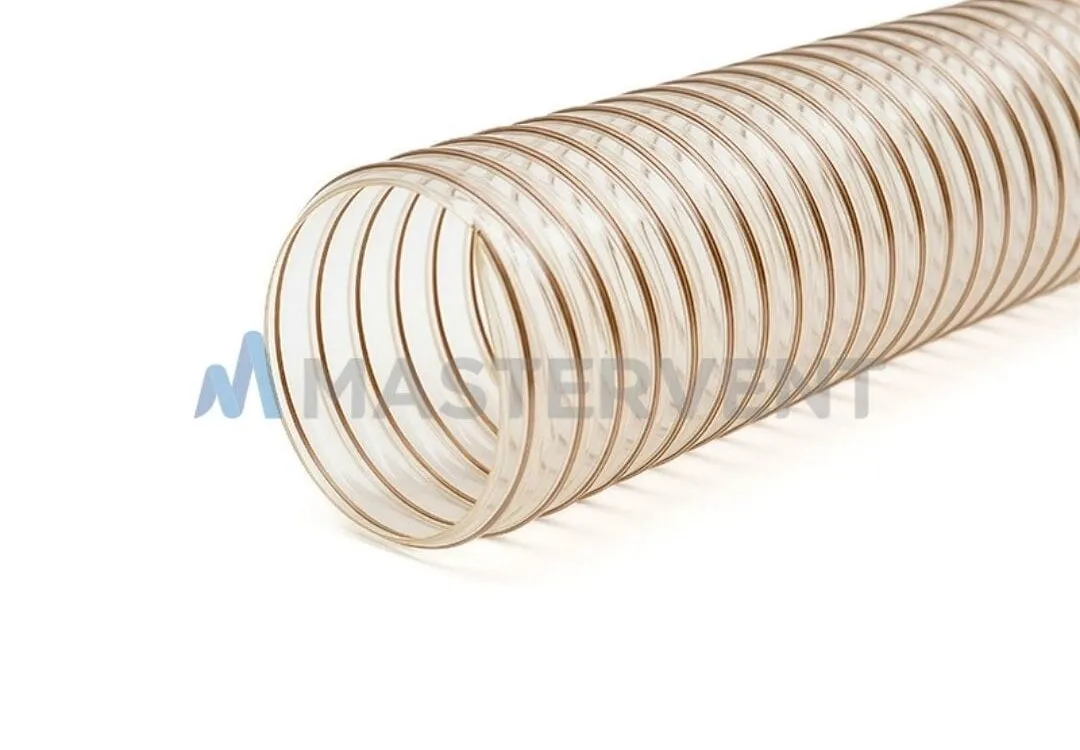
VENT PUR P60
High-quality cellulose blowing hose made of transparent polyurethane with a wall thickness of 0.6 mm. Reinforced with a copper-coated spring steel wire helix, providing excellent mechanical strength. The hose is axially compressible and gas-tight, making it suitable for demanding industrial applications.
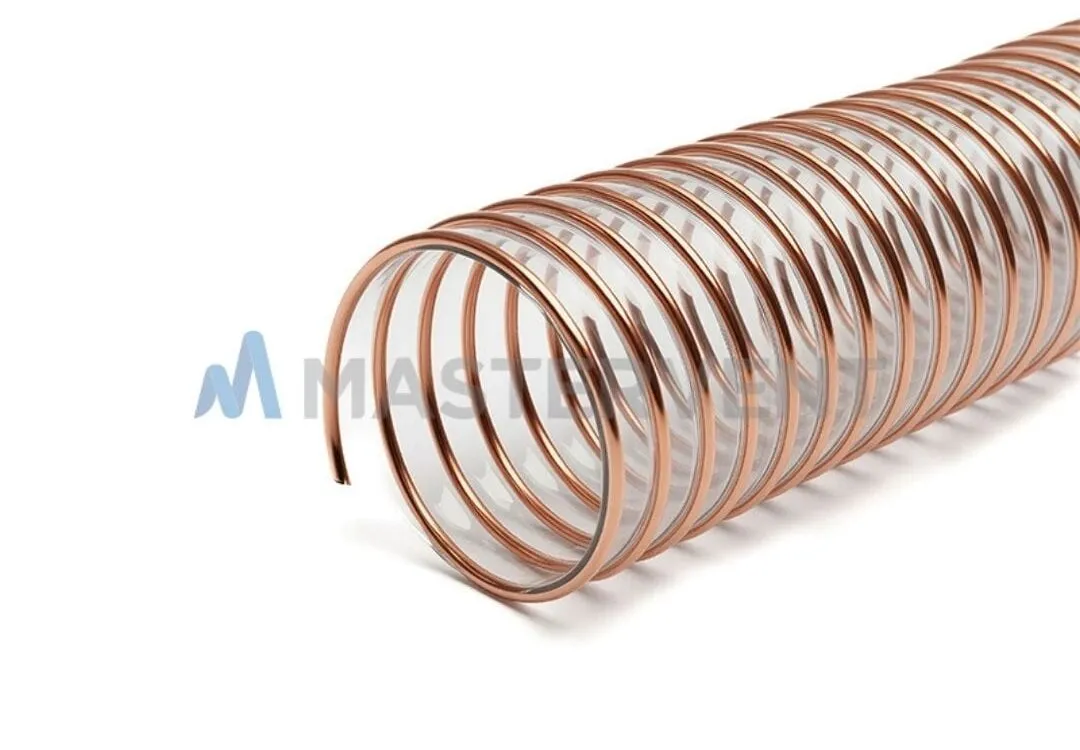
VENT PUR P70
High-quality cellulose blowing hose made of transparent polyurethane with a wall thickness of 0.7 mm. Reinforced with a copper-coated spring steel wire helix, ensuring excellent mechanical strength. The hose features a smooth inner wall, which facilitates material flow and minimizes resistance. It is gas-tight, antistatic, flame-retardant, and extruded, making it suitable for demanding industrial applications.
Key Properties of Insulation Blowing Hoses
Due to the continuous flow of insulation fibers, hoses used in blowing machines must provide excellent abrasion resistance, flexibility, and durability. For this reason, steel wire reinforced polyurethane hoses are the most commonly used solution.
Abrasion Resistance
This is the most important factor affecting hose service life. The greater the material’s abrasion resistance, the longer the hose will last.
Lightweight Construction
Despite the use of a steel wire helix, modern polyurethane hoses remain relatively lightweight, making everyday work on construction sites easier.
Bend Resistance
Good flexibility allows the hose to be used in tight spaces without the risk of permanent deformation.
Transparency
The transparent wall enables continuous monitoring of cellulose flow and allows blockages to be detected quickly.
Electrostatic Charge Dissipation
During the pneumatic conveying of bulk materials, electrostatic charges may accumulate. Hoses reinforced with a steel wire helix allow these charges to be safely dissipated when properly grounded.
How to Choose a Hose for a Cellulose Blowing Machine
Selecting the right hose should take into account the specific application requirements and the parameters of insulation blowing machines used for cellulose or mineral wool insulation.
When choosing a hose, consider:
Hose Diameter
A hose that is too small may increase flow resistance and reduce material conveying efficiency.
Installation Length
Pressure losses increase as hose length grows. Therefore, the blowing machine parameters and hose diameter should be selected accordingly.
Wall Thickness
The greater the intensity of use, the more important it becomes to choose a thicker polyurethane wall that provides a longer service life.
Blowing Machine Capacity
The hose should be matched to the volume of material being conveyed and the airflow parameters generated by the equipment.
Common Problems During Cellulose Transport
An improperly selected hose can lead to various operational issues.
The most common include:
- Material blockages inside the hose
- Excessive wall wear
- Reduced machine performance
- Uneven cellulose flow
- Accumulation of electrostatic charges
Using high-quality polyurethane hoses can significantly reduce the risk of these problems.
Common Mistakes When Selecting a Hose
When purchasing a hose for an insulation blowing machine, it is advisable to avoid mistakes such as:
- Choosing a hose diameter that is too small
- Using thin-walled hoses for intensive applications
- Selecting a hose without grounding capability
- Using a hose length that does not match the working conditions
Such mistakes can lead to more frequent breakdowns and increased operating costs.
Discover the Advantages of Mastervent Solutions
Cellulose blowing hoses are among the most important components of pneumatic conveying systems used for effective building insulation. Due to the intensive abrasion generated by the transported material, steel wire reinforced polyurethane hoses are the preferred solution.
Their outstanding abrasion resistance, flexibility, grounding capability, and long service life make them ideal for professional cellulose blowing machines as well as demanding insulation projects on construction sites.
Explore the Mastervent product range and find the right hose for your insulation application.